Habits· 12 min read
Identity-Based Habits: Do They Really Work?
Identity-Based Habits: Do They Really Work?
The year is 2008. A team of Stanford and Harvard researchers is about to run one of the more elegant political experiments in recent memory.
On the eve of the US presidential election, they surveyed eligible voters in California and split them into two groups. The first group got questions framed around doing: "How important is it to you to vote in the upcoming election?" The second group got questions framed around being: "How important is it to you to be a voter in the upcoming election?"
One word — verb versus noun. That was the only change.
Then the researchers checked official records to see who actually voted.
The "be a voter" group turned out at a markedly higher rate: 95.5% versus 81.8% in the California study. A second experiment, in the 2009 New Jersey gubernatorial election, found a gap of about 11 percentage points (89.9% versus 79.0%). The paper, by Christopher Bryan, Gregory Walton, Todd Rogers and Carol Dweck, was published in PNAS in 2011. What makes the result particularly striking is that turnout was measured through official state records — not self-reporting. The behavior happened weeks after the survey, without any follow-up contact from the researchers. A quiet shift in self-concept moved a real-world behavior.
That finding sits at the centre of a clear and counterintuitive idea: how you describe yourself shapes what you do. And it raises an obvious follow-up — if it works for voting, can it work for your habits?
Why "I Am a Runner" Hits Differently Than "I Want to Run"
The mechanism isn't mystical. It's closer to how the brain uses categories.
When you say "I want to run three times a week," you've stated a preference. Preferences compete with other preferences. Right now, you also want to sleep in, check your phone, and skip cold shoes at 6 a.m. Preferences fight each other. You're negotiating every single morning.
When you say "I'm a runner" — and mean it even a little — you've made a category membership claim. Categories come with behavioral scripts. Runners get up when it's cold. Runners keep their shoes by the door. Runners don't negotiate; they just go.
Psychologist Daphna Oyserman has studied this under the term identity-based motivation. In a 2009 paper in the Journal of Consumer Psychology, she argued that identities carry a readiness to act and to use particular ways of thinking, so people are drawn to behaviors that fit who they take themselves to be. In that view, the behavior stops feeling like discipline and starts feeling like character expression.
The key phrase is identity-congruent. The behavior has to feel like evidence of who you are, not just a goal you're chasing. This is why two people with the same goal — "get fit" — can have dramatically different results based on how they describe that goal internally. One is trying to achieve fitness. The other has quietly decided they're the kind of person who moves every day. Same alarm. Different relationship to the discomfort.
Atomic Habits — James Clear (Paperback)
As an Amazon Associate, we earn from qualifying purchases — at no extra cost to you.
The Research's Fine Print
The Bryan et al. finding is real, but it doesn't come without conditions — and most write-ups skip them.
The studies were small. The California experiment had 88 participants in its final sample, and the New Jersey one had 214 voters matched to state records. The California participants were recruited through a social networking site and a university participant pool, and were mostly young. The researchers also noted that how likely people were to vote beforehand strongly predicted whether they did. Identity framing nudged turnout; it didn't replace motivation. If the behavior you want is entirely external — a doctor's recommendation, a resolution made under pressure, a goal you adopted for someone else — relabeling yourself overnight probably won't shift much. The identity needs at least a thin root of actual desire. That last point is our reading of the research, not a finding of the paper.
There's also the believability problem. Calling yourself "a marathon runner" when you've never jogged two miles in sequence isn't inspiring; it's uncomfortable. Smaller, more credible identity shifts are likely to work better. You're not claiming to have become someone else. You're borrowing from a version of yourself that's one step ahead, not fifty.
Think of it as a forward-dated memo to your future self. You're claiming the direction of travel, not the destination.
The other thing worth noting: with so few studies, identity framing is a useful lever, not a guarantee. It works best when it's paired with actual behavior — which brings us to how the mechanism actually runs.
The Actual Mechanism: Small Proofs Stack
When you claim an identity and then act on it, each action becomes evidence for the identity. The identity gets one data point. Claim it tomorrow, act on it tomorrow, and the evidence stacks. Over time, the identity doesn't require effort to maintain — it's just accurate. The behavior becomes self-confirming.
Here's how it works in everyday terms. Say you want to read more consistently. You don't announce to anyone that you're "a reader." You read two pages before bed tonight. That's one data point.

Kindle Paperwhite 2024 (16GB, Black)
As an Amazon Associate, we earn from qualifying purchases — at no extra cost to you.
Tomorrow, when someone mentions a book, you say you've been reading more lately. That's social reinforcement — the identity just acquired some external reality. The day after, you reach for your phone at 10 p.m. and feel a flicker of friction: a reader wouldn't do this right now. That friction isn't failure. That friction is the identity working.
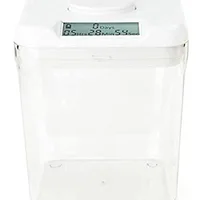
Kitchen Safe kSafe Time Locking Container (Medium)
As an Amazon Associate, we earn from qualifying purchases — at no extra cost to you.
You won't win every one of those friction moments. You just need to recognize them as signals — evidence that the identity is real enough to create resistance — rather than treating them as proof you're the wrong kind of person.
how long does it take to build a habit
How to Try This for One Habit
You don't need a personality overhaul. You need one identity claim, one anchor behavior, and a habit of noticing evidence as it arrives.
Step 1: Translate the goal into a noun. Pick a behavior you genuinely want to build and frame it as a type of person rather than a target. Not "exercise more" — "someone who moves their body every day." Not "stop procrastinating" — "someone who starts before they feel ready." The noun form has behavioral implications the verb form doesn't carry.
Step 2: Find the smallest plausible proof. What's the lowest-effort action that still qualifies as evidence for this identity? If you want to be someone who moves daily, maybe it's ten minutes of walking. For consistent writing, maybe it's one paragraph before anything else. Make it small enough to do on genuinely difficult days, because identity grows through consistency, not intensity.
Step 3: Track evidence, not streaks. A streak-based tracker tells you whether you failed to miss a day. An evidence tracker tells you something different: here is what I've accumulated. A missed day doesn't reset the evidence. It's just one day without new data. The identity doesn't vanish; the accumulation simply pauses. This is a subtle shift, but it changes how recovery feels after a hard week.
Step 4: Use the friction, don't fight it. When the new identity conflicts with an older habit, you'll feel tension. That moment isn't a sign you're failing. It's the identity operating — asserting that you're someone for whom the old habit doesn't quite fit anymore. You don't need to win every moment. You only need to notice them as meaningful, and you'll win them more often over time.
the sunk cost trap why you hold on too long
What Identity Framing Won't Fix
It's worth being clear about the limits.
Identity framing isn't a substitute for skill. Calling yourself "a writer" doesn't teach you to structure an argument. Calling yourself "a runner" doesn't train your cardiovascular system. The identity can prime the practice, but the practice still has to happen.
It also won't override a misaligned environment. If your workspace is built for distraction, calling yourself "a focused person" won't rearrange the furniture. The framing works best when the physical setup already supports the behavior, or when you make deliberate changes to support it.
There's also a lot the research hasn't settled: how long identity effects persist without reinforcement, how they interact with personality traits, and whether the strategy works equally well across habit types. The honest position is that framing seems to matter — but we don't fully know the boundary conditions.
The contrast between the two approaches becomes clearer when you look at them side by side:
| Outcome framing | Identity framing | |
|---|---|---|
| Central question | "What result do I want?" | "What kind of person am I?" |
| When results are delayed | Motivation often stalls | Practice can continue |
| After a missed day | Streak broken; reset looms | Evidence paused; identity intact |
| Source of durability | External (results arriving on schedule) | Internal (character in motion) |
Results fluctuate. Character compounds.
The voter study was a clean demonstration of something that's easy to dismiss until you've felt it: a one-word shift in self-description was associated with more people getting to the polling booth. It was a small set of studies, and it's worth holding the result with some humility. But the direction was consistent across both elections. Identity can shape behavior. The framing you carry shapes what feels possible.
You're already holding some version of yourself in mind every day. Most of the time, it arrived by default — built from old feedback, early experiences, and accumulated small choices you made without much intention. The question this research raises is whether you'd like to be more deliberate about which version you carry forward.
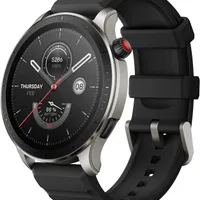
Amazfit GTR 4 Smartwatch (46mm, Black)
As an Amazon Associate, we earn from qualifying purchases — at no extra cost to you.
What habit would you test this framing on first? Put it in the comments — naming it clearly is, in a small way, part of the experiment.
Was this helpful?