Mindset· 10 min read
Self-Distancing: Why Zooming Out Actually Calms Anxiety
Shifting to an observer vantage point on your feelings reduces their intensity. The science of self-distancing — and how to use it today.
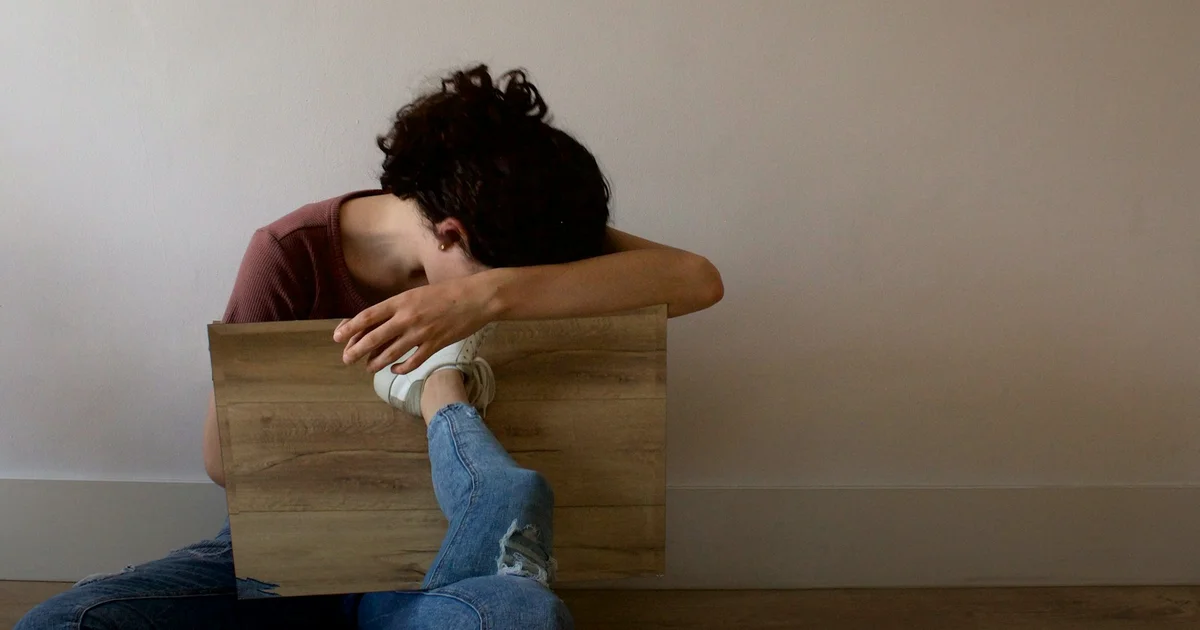
Self-Distancing: Why Zooming Out Actually Calms Anxiety
I had a conversation once — a real one, not a metaphor — where a friend described watching herself have an argument. Not literally watching. But she said it: "I just stepped back and watched myself losing it. And suddenly, I wasn't losing it anymore."
At the time I thought she was being poetic. Turns out, she was describing something two psychologists — Ethan Kross at the University of Michigan and Ozlem Ayduk at UC Berkeley — had been measuring in their labs for years.
The phenomenon is called self-distancing. And if you've ever found yourself spiraling — really spiraling, where every anxious thought just drags you deeper into the next one — this research is probably the most practically useful thing you'll read this week.
The Problem With Being Completely Inside Your Own Feelings
Here's what happens when anxiety grabs you: you become the feeling.
Not metaphorically. Experientially. Your vantage point collapses inward until there's no space between you and what you're going through. You're not thinking about the hard thing; you're reliving it, re-feeling it, replaying its full original weight every time it surfaces in your mind.
Researchers call this an immersed perspective. And it's the default mode for most people in most emotionally loaded situations.
The immersed mode isn't inherently broken — it's what allows you to take things seriously, stay emotionally connected to people you care about, and feel the weight of decisions that actually matter. But when you're immersed in an anxious spiral, the same mechanism that normally serves you starts working against you. Instead of processing the difficult thing, you're just re-experiencing it on loop. Each pass through the content reactivates the same emotional response it produced the first time, and nothing gets resolved.
You've probably felt this. You sit down to think through a hard situation, genuinely hoping to feel better about it, and twenty minutes later you feel measurably worse. Not because anything changed — because the act of thinking from inside it amplified the emotional signal rather than helping you make sense of it.
That gap between thinking and spiraling — the same territory covered by why intolerance of uncertainty drives chronic worry — is precisely what Ethan Kross and Ozlem Ayduk started studying in the early 2000s. And what they found turned a fairly obvious-sounding idea — "try to get some perspective" — into something measurable, teachable, and genuinely surprising.
What Kross and Ayduk's 2008 Research Actually Found
In their landmark 2008 paper published in Personality and Social Psychology Bulletin, "Facilitating Adaptive Emotional Analysis: Distinguishing Distanced-Analysis of Depressive Experiences From Immersed-Analysis and Distraction," Kross and Ayduk ran a deceptively simple study.
They asked participants to think about a genuinely difficult, painful personal experience. But they varied exactly one thing: the vantage point from which participants were instructed to do the thinking.
One group was told to analyze their experience immersed — to re-enter it through their own eyes, as though reliving it from the first-person perspective. The other group was instructed to adopt a distanced vantage point — to watch the same experience unfold as if they were an outside observer, seeing it happen to someone else they knew well.
Same difficult experience. Same amount of time spent thinking about it. Same instruction to really engage with it. The only variable was the angle.
The results were striking. Participants in the distanced condition showed measurably lower depressed affect than those who stayed immersed, and the gap held up at both one-day and seven-day follow-ups — the distanced group reported fewer recurring, intrusive thoughts about the experience over time. They reported feeling less caught up in the painful feelings. A companion study the same year, also by Ayduk and Kross, found that a distanced perspective lowered blood pressure reactivity too — so the effect isn't just self-reported. And critically, none of this was explained by avoidance or disengagement — the distanced group hadn't thought less about the difficult content. They'd thought about it differently, and that difference was doing real work.
The vantage point itself was the mechanism.
This is the finding that makes self-distancing research genuinely interesting rather than just intuitive: it's not about thinking less about hard things, or distracting yourself from them, or suppressing what you feel. It's about changing the angle from which you engage with the same material — and that angle change, on its own, measurably reduces how much the material costs you emotionally.
Why "Stepping Back" Isn't the Same as Avoiding
The most common objection when people first hear about self-distancing is some version of: "Isn't that just avoidance? Or dissociation?"
It's not. And the distinction matters a great deal.
Avoidance means not engaging with the difficult content at all — changing the subject in your mind, burying yourself in work, opening your phone until the discomfort dulls down to something manageable. Dissociation is a more extreme version, where conscious awareness genuinely disconnects from present experience rather than simply shifting its angle.
Self-distancing keeps you in full contact with the material. You're still thinking about the hard thing. You're not flinching away from it, pretending it doesn't exist, or deciding the feeling isn't worth examining. You're just watching it from a different seat in the theatre.
Kross explores this distinction at length in his book Chatter — if you haven't read it, it's the clearest translation of this research into everyday language I've come across, and it changed how I think about my own inner voice.
Chatter: The Voice in Our Head and How to Harness It — Ethan Kross (Vermilion paperback)
The article names Chatter directly as the clearest translation of Kross's self-distancing research into everyday language — the link is the reader's obvious next step, not an interruption.
As an Amazon Associate, we earn from qualifying purchases — at no extra cost to you.
The core insight: engaged processing from a distanced vantage point is closer to a scientist examining a specimen than to a patient trying not to think about their diagnosis. The difficult content stays. Your relationship to it shifts.
That shift is what changes the emotional math.
When you're immersed, your brain runs the original event's emotional program — same triggers, same responses, same physiological activation as when the event first happened or the anxious thought first landed. When you step back to observe, that program gets interrupted. The event becomes information rather than a relived experience. And information can be processed, examined, and made sense of. Experiences, when you're fully inside them, just keep happening.
How Self-Distancing Differs From Naming Your Feelings
There's a related piece of research worth knowing here, because it's often conflated with self-distancing when it's actually something quite different.
Matthew Lieberman's affect-labeling research showed that simply naming a feeling — saying to yourself "I am anxious" or "this is anger" — measurably dampens amygdala reactivity in the moment. It's a real effect with solid data behind it — see how naming your emotions changes your brain's stress response for the deeper mechanism. But naming and distancing operate through two genuinely distinct mechanisms.
Naming works at the level of vocabulary: more precise, specific emotional language gives your brain more differentiated categories to regulate from, which produces more targeted regulation. You're still inside the experience; you're labeling it more accurately.
Distancing works at the level of vantage point: you step outside the experience entirely and watch it from a remove. You're not necessarily naming the feeling any more precisely — you're simply no longer inside it.
The two can work together, and naming from a distanced perspective is arguably more effective than either alone. But understanding what each actually does helps you choose the right intervention for the moment you're in.
If the spiral is still building momentum, distancing first — creating the observer vantage point — often gives you the cognitive breathing room to then name what you're observing accurately. If you're already in a slightly more regulated state, naming alone may be enough.
Sony WH-1000XM5 Noise Cancelling Headphones (Black)
Placed after the naming-vs-distancing section: creating the observer vantage point is easier when external noise isn't competing with the internal narrator. Practical bridge between the mechanism and the practice.
As an Amazon Associate, we earn from qualifying purchases — at no extra cost to you.
Three Self-Distancing Techniques That Actually Work
The research is one thing. Here's what it looks like in a Tuesday afternoon at 3pm when something has gone sideways.
The Name Switch
When you're spiraling, your internal narrator automatically runs in first person: I'm anxious. I don't know what to do. This is going to be a disaster.
The single most studied self-distancing technique in Kross's research is switching that narrator from first to third person. Not I'm anxious but [Your name] is anxious. Not I don't know what to do but [Your name] doesn't know what to do right now.
It sounds almost too simple to be real. But multiple replications of the original work have now confirmed: this small linguistic shift measurably reduces emotional intensity and increases the quality of advice people give themselves. When you call yourself by name, you're already moving from the immersed to the distanced vantage point, because you're referencing yourself as someone you're observing rather than someone you're being.
Try it the next time you notice the internal monologue running on loop. Switch the pronoun, call yourself by name, and notice what happens to the volume of the spiral.
The Fly on the Wall
A related technique: imagine you're a small, neutral observer — a fly on the wall — watching the difficult scene unfold. Where is the fly? What does it see? What does the situation actually look like from that corner of the room?
This works especially well with anticipatory anxiety, when you're dreading something that hasn't happened yet. Run the imagined scene from the fly's perspective. What does the person you're watching (who happens to be you) actually look like going into this moment? What's the realistic range of ways it plays out, seen from outside?
Most people find the scenario becomes significantly less threatening when viewed from the fly's altitude than it does at ground level. The stakes feel the same. The emotional charge does not.
The Time Telescope
This one borrows from a different section of Kross's research but works through the same core mechanism: project yourself forward in time.
"How will I think about this situation in ten years?"
That question forces a temporal distance that replicates much of what spatial distance achieves. You're no longer inside the moment — you're watching it from a future vantage point that can assess it as a data point in a longer story rather than as a defining catastrophe in its own right.
This technique gets direct attention in Susan David's Emotional Agility, which is worth having within reach if you're building a more functional relationship with difficult feelings more broadly.
Emotional Agility — Susan David (Penguin/Avery paperback)
The Time Telescope section names Emotional Agility explicitly as the book that gives temporal distancing direct attention. Second and final book in the article — respects the 2-book ceiling.
As an Amazon Associate, we earn from qualifying purchases — at no extra cost to you.
David's work and Kross's research reinforce each other well: the common thread is that emotional intelligence isn't about feeling less, it's about processing what you feel from a vantage point that actually serves you.
The Counterintuitive Finding You Probably Haven't Heard
Here's the part of the self-distancing research that surprises people most, including me when I first read it.
Most people assume that processing a painful experience fully requires staying inside it. That genuinely understanding what happened demands you feel it deeply, immersively, until something shifts. There's a version of that intuition that's right — you can't process what you've completely avoided.
But Kross and Ayduk's broader body of research shows that the intensity of immersion is not the same thing as the depth of processing. Participants who stayed immersed didn't gain more insight into their painful experiences than participants who stepped back. They just felt worse. For longer. With no corresponding increase in understanding.
The distanced group reported higher quality insight — more meaningful understanding of what the situation meant and what they could genuinely learn from it — while simultaneously feeling less consumed by it.
Immersion doesn't create understanding. It creates intensity. And those are not the same thing.
This matters if you've ever told yourself that the reason you're still turning something over is because you care, or because you're being thorough, or because you haven't finished working through it yet. Sometimes that's true. Often, what's actually happening is that you're in the immersed position, which makes the loop feel like progress when it isn't.
How to Start Using This Today
Here's a practical entry point for three situations where self-distancing pays off most:
Before a difficult conversation: In the minutes before it starts, run the scene from the fly-on-the-wall perspective. What does a composed, clear-headed version of you look like in that room? What would you notice as an outside observer about what that person does well when they're at their best? You're not performing calm — you're pre-loading the distanced vantage point before the emotional temperature rises.
Mid-spiral: Switch your internal narrator to third person. Call yourself by name. Notice whether the spiral's grip loosens even slightly. It usually does within about thirty seconds — which is not a magic fix, but it's enough breathing room to make a better decision about what to do next.
After something hard: Instead of replaying it from the inside, ask what a wise, caring older friend would say about what just happened. You're stepping into the distanced observer position on your own behalf — and Kross's research consistently shows this generates kinder, more accurate self-assessment than the immersed version, without requiring you to minimize or dismiss what happened.
If you want to go deep on the science behind this, Chatter is the most direct route — it's essentially a book-length examination of the inner voice and what actually helps versus hurts when it's running on overdrive.

Kindle Paperwhite 2024 (12th Gen, 16GB, Black, Without Ads)
Sits on the 'if you want to go deep on the science' line — the highest-ticket item in the set (£160), placed where reading intent is already active rather than re-linking the same book twice.
As an Amazon Associate, we earn from qualifying purchases — at no extra cost to you.
For a practice that makes self-distancing tactile and traceable, writing from the third-person perspective in a dedicated journal creates an ongoing record of the distance you've managed to find — and over time, that record becomes its own evidence that you're not permanently inside every hard moment you encounter.
Clever Fox Habit Calendar Circle (24-Month Habit & Goal Journal)
Directly serves the closing practice: writing from the third-person perspective in a dedicated journal, creating a traceable record of the distance found over time.
As an Amazon Associate, we earn from qualifying purchases — at no extra cost to you.
If you want to turn this into a daily emotional regulation practice that actually sticks, start here.
The View From Slightly Above
There's an old idea, echoed across contemplative and philosophical traditions, that the observer holds more power than what's being observed — that something shifts the moment you step into the witnessing position rather than the experiencing one. The empirical data gives that idea a very specific, testable form: when you shift from the person being overwhelmed to the person watching someone feel overwhelmed, you reclaim the one thing the spiral was steadily consuming — your capacity to think clearly.
That's what self-distancing actually is. Not detachment. Not the performance of calm when you don't feel it. Not avoidance dressed up in the language of perspective. It's a genuine change in vantage point that happens to coincide with a genuine, measurable reduction in how much the feeling costs you — while increasing what you actually learn from it. That's not a small thing. That's what it looks like to design your evolution consciously rather than just be swept along by it.
The immersed perspective will always feel more real in the moment. That's its defining feature. But real doesn't mean accurate. And it definitely doesn't mean useful.
Kross and Ayduk's data says the view from slightly outside is often both clearer and kinder.
What's a situation you're currently inside that might look different from the fly's corner of the room? I'm genuinely curious what you notice when you actually try the shift — drop it in the comments.
Was this helpful?