Mindset· 10 min read
Why Rejection Hurts Like Physical Pain — Neuroscience
Eisenberger and Lieberman's fMRI study found rejection activates the same brain region as physical pain. Learn the neuroscience — and how to recover.

Why Rejection Hurts Like Physical Pain — And What Neuroscience Says to Do About It
Three days. That's how long I replayed the email.
It wasn't even a job I desperately wanted. A freelance project that would've been interesting, maybe. The client's reply was two sentences — polite, generic, final. And yet there I was on day three, staring at the ceiling at 11 PM, reconstructing every possible thing I'd written wrong in my proposal, every subtext I might have missed, every signal I should have read earlier.
The embarrassment wasn't just the rejection. It was the reaction to the rejection. The feeling didn't fit the stakes. And I didn't have a good explanation for why a two-sentence email from a stranger could land like a punch to the sternum — until I found the research.
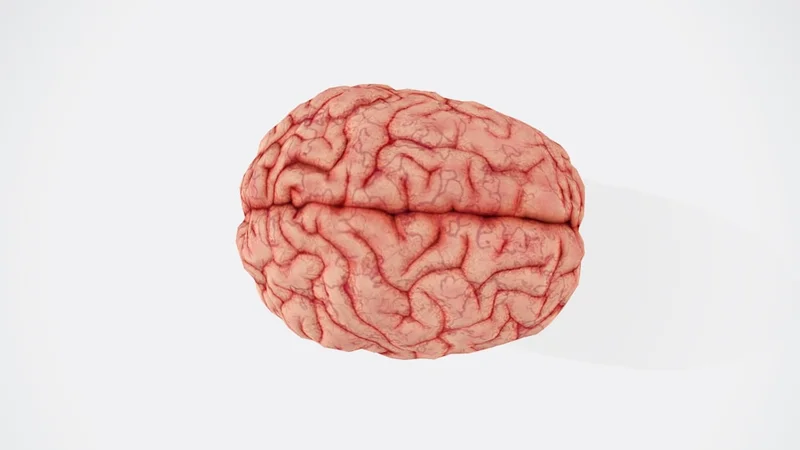
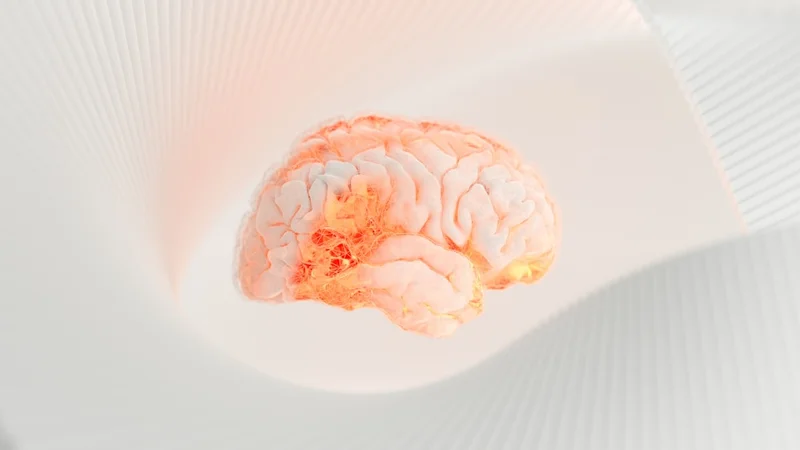
What neuroscience found: Rejection activates the dorsal anterior cingulate cortex — the same brain region that registers the distress of physical pain. Eisenberger and Lieberman's 2003 fMRI study confirmed that social exclusion isn't metaphorically painful; neurologically, your brain processes it the same way it processes physical injury.
What a Ball-Tossing Video Game Revealed About Your Brain
In 2003, Naomi Eisenberger and Matthew Lieberman, psychologists at UCLA, published a study in Science that reframed how we understand social pain. It used one of the most elegantly simple experimental setups in modern neuroscience: a video game called Cyberball.
Participants were told they were playing a virtual ball-tossing game with two other people online. In reality, the other "players" were controlled by a computer program. For the first part of the game, everyone played together normally — passes going around, a casual little digital sport. Then, gradually and deliberately, the two computer-controlled players started throwing the ball only to each other, leaving the participant out entirely.
That's it. That was the rejection. No words. No confrontation. No stakes beyond a children's game with strangers you'd never meet.
While this played out, participants were lying inside an fMRI scanner, and Eisenberger and Lieberman were watching exactly which regions of their brains lit up in response to being excluded.
The finding changed everything.
Social exclusion — being frozen out of a ball-tossing game by what were, functionally, cartoon characters — activated the dorsal anterior cingulate cortex, a region of the brain strongly associated with the distress component of physical pain. Not just loosely associated. The activation pattern showed up consistently across participants, and crucially, the degree of self-reported social distress correlated directly with the degree of activation in that exact region.
The common phrase "rejection hurts" turned out to be neuroscience, not metaphor.

Sony WH-1000XM5 Noise Cancelling Headphones
Right after the Cyberball finding lands — the brain routes exclusion through pain circuitry. Frame: when the alarm is firing, the first practical move is lowering the input volume so the signal isn't constantly re-tri…
As an Amazon Associate, we earn from qualifying purchases — at no extra cost to you.
This Wasn't an Accident of Evolution
The natural question is: why would the brain route social exclusion through the same circuitry it uses for a broken bone?
It's not a design flaw. It's an extraordinarily effective design.
Think about what physical pain actually does. It's not there to punish you — it's a signal that something is damaging your body and demands immediate attention. Pain forces priority. You can't comfortably ignore a broken wrist and keep working on a spreadsheet. The system evolved specifically because threats to physical integrity needed to be non-negotiable attention-getters.
Now consider what social exclusion meant for most of human history. We didn't survive as individuals — we survived as groups. Being cast out of a tribe, losing access to collective protection, food-sharing, and childcare wasn't uncomfortable. It was a death sentence. The stakes of social exclusion, for the vast majority of our species' existence, were comparable to the stakes of a physical wound.
Eisenberger and Lieberman's interpretation is that the brain appears to have solved this problem by reusing already-available circuitry. The neural hardware that made physical threats impossible to ignore got repurposed — or more precisely, expanded — to make social threats equally hard to dismiss. You didn't need to build a new alarm system for social pain when you already had one for physical pain. You just needed to route both signals through the same region.
The result is a brain that responds to a hostile email, a cold shoulder from a friend, or a rejection letter with the same category of signal it uses when you burn your hand on a stove. Not the same intensity, necessarily — but the same type of signal, running through the same type of circuitry.
See also: Stress Doesn't Kill You. Believing It Does Might.
Why Rejection Feels So Disproportionate to the Situation
This is the part that actually helped me, personally, more than anything else in the research.
If you've ever found yourself blindsided by how much a seemingly small rejection hit you — a friend who didn't invite you to something, a lukewarm response to work you were proud of, a date that didn't text back — you've probably also felt the secondary sting: why am I being so dramatic about this?
Here's the thing. You're not being dramatic. Your brain isn't manufacturing an exaggerated reaction out of weakness or neediness. It's running the same distress-signaling circuitry it uses for genuine physical injury, because that's what it was built to do.
The gap between "the stakes of this situation on paper" and "how bad this feels in my chest" isn't a character flaw. It's biology operating exactly as designed, just without the context that made those stakes life-or-death. Your rational brain knows a job rejection isn't a genuine threat to your survival. Your dACC doesn't care what your rational brain knows.
This distinction — between what's happening at the level of conscious reasoning and what's happening at the level of neural pain circuitry — has a specific, practical implication.
Philips SmartSleep Wake-Up Light HF3520
Placed exactly where the article says recovery needs actual time, like inflammation reducing. Sleep is the recovery window. Sunrise simulation makes the mornings after a rejection materially less brutal — this is reco…
As an Amazon Associate, we earn from qualifying purchases — at no extra cost to you.
When you've been genuinely rejected, you need actual recovery time. Not a pep talk. Not a quick scroll through inspirational quotes. Not "just getting back on the horse" within the hour because it shouldn't be a big deal. The same way a physical injury needs time for inflammation to reduce and tissue to heal, a social pain signal needs time to settle.
Forcing yourself to feel fine faster doesn't speed recovery — it just adds the guilt of "I should be over this by now" on top of the pain that's already there. Eisenberger's broader research program found that social pain and physical pain share not just the same circuitry but some of the same mediators: there's evidence that over-the-counter painkillers reduce social pain scores in experimental settings, which is either fascinating or deeply strange depending on your relationship to neuroscience. The point isn't that you should reach for a painkiller after every rejection. The point is that the overlap is real enough to show up in pharmacological data.
What Actually Helps — and What Doesn't
The most counterproductive thing I've ever done after a rejection is immediately tried to reason myself out of caring about it.
"They weren't right for me anyway." "Their loss." "I have other options." All true, probably. All completely unhelpful in the first 24 hours, because I wasn't in a reasoning deficit. I was in a pain signal that had nothing to do with reasoning.
Here's what the research, combined with the psychology built on top of it, actually suggests:
Name what happened explicitly. This sounds embarrassingly simple, but there's a body of work, including research on affect labeling pioneered by the same Matthew Lieberman from the Cyberball study, suggesting that putting a precise name to what you're experiencing ("I was excluded," "that stung," "I feel genuinely hurt by this") measurably reduces amygdala activity and dampens the brain's broader distress response. Not eliminates it. Reduces it. Writing it down appears to amplify this effect.
Clever Fox Habit Calendar Circle (24-Month)
Directly under the affect-labeling paragraph — the single most evidence-backed action in the article. Lieberman's own research says writing it down amplifies the amygdala-dampening effect. Give the reader the surface…
As an Amazon Associate, we earn from qualifying purchases — at no extra cost to you.
Give yourself a defined recovery window. Not an open-ended one. The instinct is to either (a) rush yourself or (b) ruminate indefinitely. Neither helps. A defined window — "I'm going to feel bad about this until tomorrow evening, and that's allowed" — gives your nervous system permission to process without locking you into a spiral. It's the emotional equivalent of knowing a bruise will stop hurting in a few days.
Don't perform resilience. The cultural script around rejection is heavy on the "bounce back immediately" framing. That script is built on the implicit assumption that needing recovery time signals weakness or excessive sensitivity. Eisenberger and Lieberman's data argues otherwise. Needing recovery time after social pain signals an intact neural system, not a fragile character.
Self-Compassion: The Proven Power of Being Kind to Yourself — Kristin Neff
Sits on the 'don't perform resilience' beat. Neff is already named later in the article, so this is a pre-earned reference, not an intrusion. Book #1 of 2 (catalog limit respected).
As an Amazon Associate, we earn from qualifying purchases — at no extra cost to you.
Reconnect physically. This one sounds vague until you connect it back to the mechanism. The dACC activation from social exclusion isn't just associated with pain distress — it's also associated with feelings of safety when the threat is removed. Face-to-face time with people you actually trust, not a Slack message, not a group text, but physical presence with someone who isn't going anywhere — measurably changes the neural context. It's the reason why genuine loneliness and social pain can feel physically cold: there's evidence of a thermal-social warmth overlap that piggybacks on the same circuitry.
The Jia Jiang Experiment: What Happens When You Practice Rejection
Jia Jiang spent 100 days deliberately seeking rejection — asking a Krispy Kreme employee to make him Olympic-ring donuts, requesting a "burger refill" at a fast-food counter, asking a total stranger if he could play soccer in their backyard — and documenting each one.
His finding, which he wrote about in Rejection Proof, wasn't that rejection stopped hurting. It was that repeated, non-threatening exposure to rejection slowly detached the distress signal from the catastrophic meaning he'd been automatically attaching to it. The dACC was still doing its job. But the interpretation his prefrontal cortex put on that signal — this means I'm worthless, this means the worst thing I feared is true — gradually lost its automatic grip.
Rejection Proof — Jia Jiang
Placed inside the Jia Jiang 100-days section — the reader has just been told his story and will want the source. Highest contextual pull of any product in the article. Book #2 of 2.
As an Amazon Associate, we earn from qualifying purchases — at no extra cost to you.
This is the distinction that matters practically. You can't switch off the social pain circuitry — nor would you want to, because it exists for a reason. But you can, over time, change what story you're telling about the signal. The pain is real. The narrative it implies is negotiable.
Kristin Neff's self-compassion research adds a specific and useful piece here: the people who recover from rejection fastest aren't the ones who feel it least. They're the ones who treat themselves, in the middle of the pain, with roughly the same patience and gentleness they'd extend to a friend in the same situation. Not dismissing what happened. Not manufacturing positivity. Just not compounding the pain signal with a secondary layer of self-criticism about the fact that they're in pain.
Liforme Original Yoga Mat
On the Neff self-compassion beat. The article's mechanism is physical: social pain runs through body circuitry, so the antidote is embodied, not argumentative. A mat is 'somewhere to go with your body when reasoning i…
As an Amazon Associate, we earn from qualifying purchases — at no extra cost to you.
See also: Self-Compassion vs. Self-Criticism: What Research Found
How to Start Recovering From Rejection Differently Today
If you've got a rejection sitting on you right now — recent or not-so-recent, small-scale or significant — here's how to work with the neuroscience rather than against it.
Step 1: Name it on paper. Write exactly what happened and exactly how it made you feel, in as specific language as you can manage. Not a journal entry about your feelings in general — a precise description of the event and the sensation. "I submitted the proposal on Tuesday. I got the rejection on Thursday. My chest went tight when I read it. I feel embarrassed, and I feel genuinely disappointed." Labeling at this level of specificity activates the prefrontal cortex and measurably dampens amygdala reactivity. It's not magic. It's neurological.
Step 2: Set a realistic recovery window. Give yourself permission to feel bad until a specific, defined point — tomorrow morning, the end of the week, whatever's proportionate. Not indefinitely, but not "I should be fine by dinner." Write it down. "I'm giving myself until Friday to feel this, and after that I'm choosing to redirect my attention."
Step 3: Don't isolate. This is counterintuitive because rejection makes you want to withdraw — partly because approaching others feels risky when your social pain system is already activated. But face-to-face time with safe people actively counteracts the exclusion signal. The brain needs evidence that you haven't, in fact, been cut off from the tribe.
Step 4: Read one rejection account that ends differently. Not an inspiration story about how someone's failure became their fuel. Specifically, something where someone describes the raw experience of rejection and then what actually happened next — which is almost always: more time passed, they adjusted, the sting faded, life continued. Reading about the full arc, including the messy middle, does more to reset realistic expectations than a highlight-reel comeback story.

Kindle Paperwhite 2024 (12th Gen, 16GB)
Step 4 literally instructs the reader to read a rejection account that ends differently. This is the most naturally-earned placement in the article — the CTA is the step itself. High ticket (£160) closing the piece.
As an Amazon Associate, we earn from qualifying purchases — at no extra cost to you.
Step 5: Return to what you're building. The practical antidote to a rejection signal isn't forcing yourself to feel positive. It's giving your brain something it can direct action toward. A specific task. A next step in a project you care about. Purposeful motion doesn't erase the pain, but it shifts your neural attention budget toward something that can generate its own feedback loop.
See also: How to Build a Morning Routine That Actually Sticks
Your Brain Wasn't Overreacting
There's a version of this conversation that ends with "so just be more resilient." That's not the version I'm interested in.
Eisenberger and Lieberman's research doesn't lead to "toughen up." It leads to something more honest: your brain is doing exactly what it was built to do, and that means recovery isn't an indulgence — it's a requirement. You wouldn't tell someone with a sprained ankle that they're being melodramatic for needing a few days off their feet. You wouldn't frame the bruising as evidence of emotional fragility.
Rejection is the same thing running through different tissue.
Design Your Evolution doesn't mean feeling nothing. It means understanding your own operating system well enough to work with it intelligently. Your social pain circuitry is one of the most ancient and functional pieces of that system. It deserves the same respect you'd give any signal that's been reliably keeping your species alive for hundreds of thousands of years.
So: what was the last rejection you tried to rush yourself past? And what might have been different if you'd treated it like the bruise it actually was?
Sources:
- Eisenberger, N.I., Lieberman, M.D., & Williams, K.D. (2003). Does rejection hurt? An fMRI study of social exclusion. Science, 302(5643), 290–292. https://www.science.org/doi/10.1126/science.1089134
- Lieberman, M.D., & Eisenberger, N.I. (2009). Pains and pleasures of social life. Science, 323(5916), 890–891.
- Lieberman, M.D., Eisenberger, N.I., Crockett, M.J., Tom, S.M., Pfeifer, J.H., & Way, B.M. (2007). Putting feelings into words: Affect labeling disrupts amygdala activity in response to affective stimuli. Psychological Science, 18(5), 421–428.
- DeWall, C.N., MacDonald, G., Webster, G.D., Masten, C.L., Baumeister, R.F., Powell, C., ... & Eisenberger, N.I. (2010). Acetaminophen reduces social pain. Psychological Science, 21(7), 931–937.
- Zhong, C.B., & Leonardelli, G.J. (2008). Cold and lonely: Does social exclusion literally feel cold? Psychological Science, 19(9), 838–842.
- Neff, K.D. (2003). Self-compassion: An alternative conceptualization of a healthy attitude toward oneself. Self and Identity, 2(2), 85–101.
- Jiang, J. (2015). Rejection Proof: How I Beat Fear and Became Invincible Through 100 Days of Rejection. Harmony Books.
Was this helpful?