Habits· 10 min read
The Willpower Myth: What Self-Control Science Shows
Ego depletion was psychology's most-cited finding—until replication failed. Here's what science now says about self-control and what actually works.

The Willpower Myth: What Self-Control Science Shows
It was 11:47 PM. I'd been disciplined all day — genuinely, effortfully disciplined. Smoothie for breakfast. No afternoon snacking. I'd declined dessert at dinner with the quiet satisfaction of someone who'd won a small internal argument with themselves.
And then I was standing in front of an open refrigerator, eating cold rice from the container with a fork, having a one-sided conversation with myself about why tonight was somehow different.
You know this feeling — not the rice specifically, but the dynamic. The day started with resolve, and somewhere between noon and midnight the resolve evaporated. The person you were at 7 AM seems to belong to a different body entirely.
For years, I had a clean explanation for this. I'd used up my willpower. The tank was empty. Science said so.
It turns out the science is considerably more complicated than that.
In 1998, Roy Baumeister and colleagues at Case Western Reserve University ran one of the most dramatic experiments in social psychology. Participants were told not to eat for three hours before arriving. They entered a room that smelled of freshly baked chocolate chip cookies. On the table: a plate of warm cookies and a bowl of raw radishes.
Half the participants were invited to eat the cookies. The other half had to eat radishes — with the cookies sitting directly in front of them, available, fragrant, absolutely off-limits.
Afterward, both groups were given an unsolvable geometry puzzle and told to persist as long as they wanted.
Cookie-eaters tried for an average of 19 minutes. Radish-eaters — who'd spent real mental effort resisting temptation — gave up after about eight.
Baumeister called this ego depletion. His interpretation: self-control draws on a single, shared psychological resource, like a cognitive muscle. Every act of discipline — resisting the cookie, concentrating through boredom, suppressing an impulse — takes a measured sip from that finite supply. When the supply runs low, the next challenge finds you defenseless.
The finding arrived at exactly the right cultural moment. It gave people a scientifically credentialed explanation for every midnight refrigerator raid, every failed resolution, every moment when the person they wanted to be lost an argument to the person they actually were. The book Baumeister later wrote with journalist John Tierney, synthesizing this research for a general audience, became a landmark in the popular science of self-discipline.
The Fifteen-Year Accumulation
Over the following decade and a half, the evidence seemed to pile up. Hundreds of studies appeared to confirm the ego depletion effect across different labs, different populations, different task combinations. By 2010, ego depletion was among the most-cited findings in psychology.
In 2007, Baumeister and colleagues introduced a biological mechanism: the glucose hypothesis. Willpower, they proposed, literally runs on blood sugar. Self-regulatory effort consumes glucose; depletion is the physiological consequence. Eat before difficult decisions, the reasoning went. Schedule demanding tasks when you're metabolically fresh. Even the finding that judges grant fewer favorable parole rulings as the day wears on was cited as evidence that ego depletion operates on everyone, continuously, whether we notice it or not.
It felt less like a theory than a confirmed law of human nature.
Then the Science Changed
In 2016, Martin Hagger at Curtin University led a multilab pre-registered replication report across 23 laboratories worldwide — including co-author Michael Inzlicht at the University of Toronto — collectively testing over 2,000 participants.
Pre-registered means the methodology was locked down before data collection began. No adjusting procedures mid-study to produce cleaner results. No selective reporting of favorable outcomes.
They found no depletion effect. None.
Hagger's earlier meta-analysis of ego depletion research — which had analyzed 198 independent effect-size tests across published studies — had already shown that accounting for publication bias shrank the average effect size dramatically. The tendency for confirming studies to get published while disconfirming studies sit in file drawers had inflated the field's confidence in a finding that may have been substantially smaller all along.
The glucose hypothesis fared worst of all. Subsequent research established that the metabolic demands of cognitive self-regulation are far too small to produce meaningful blood glucose fluctuations. Your brain isn't running out of fuel when you resist a second helping.
Baumeister has defended his original research, arguing the multi-site replication used an inappropriate task combination and that the effect is real but context-dependent. The scientific debate continues — as it should. But the consensus has shifted. Ego depletion is either smaller than originally reported, contingent on conditions the original paradigm didn't specify, or complicated enough that the clean tank-runs-dry version was always an overstatement.
Understanding what actually holds up in this literature — what builds and sustains genuine self-regulatory capacity — is what Kelly McGonigal spent years synthesizing from her Stanford continuing education course on the science of willpower. Even with everything the replication crisis has revised, her account of what the brain actually does under self-control demands remains one of the most practically organized in the field.
The Belief That's Draining Your Tank
Here's where it gets genuinely strange — and directly useful to how you run your days.
Veronika Job at the University of Zurich published research in Psychological Science in 2010 that quietly restructures the entire willpower debate. Her finding: what determines whether exerting self-control leaves you depleted isn't the exertion itself. It's your belief about how self-control works.
People who believe willpower is a limited resource that depletes with use show depletion effects in laboratory tasks. People who believe that exercising willpower is energizing — that self-control builds momentum rather than consuming a reserve — don't show those effects.
Read that again. Your working model of how willpower operates is itself a prediction about how your willpower will perform. And in the lab, that prediction tends to come true.
Veronika Job, Gregory Walton, and Carol Dweck extended the finding to real-world settings: in longitudinal studies tracking students through high-demand academic periods, those who held a nonlimited view of willpower showed significantly better self-regulation — less procrastination, better time management — than those who believed willpower was a depletable resource. Same challenges, same difficulty, different framework for understanding what they were doing.
None of this means the challenges aren't real. Decision fatigue is a genuine phenomenon. Evening judgment does differ from morning judgment. But a meaningful portion of the depletion people experience may be a self-fulfilling belief — the tank reads empty partly because they've internalized a model that says it should be empty by now.
The first intervention in building better self-control may not be rest, food, or scheduling. It may be an updated understanding of what you're actually working with.
The Three Designs That Actually Predict Self-Control

The research on what actually works — independent of where the ego depletion debate eventually lands — consistently points to three upstream interventions. None of them require you to accumulate more willpower. All of them reduce how much willpower a given situation demands.
Implementation intentions. Peter Gollwitzer at New York University has built one of the most actionable research programs in behavioral science around a surprisingly simple technique. His meta-analyses find that forming an explicit cue-response plan roughly doubles the rate of goal achievement compared to goal-setting without this structure.
The technique: instead of "I want to exercise more," you write "When I close my laptop at 5:30 PM, I will put on my workout clothes before I do anything else." The plan specifies the exact cue and the exact response. When the cue arrives, you're not deliberating — you're executing a script. The cognitive demand that would have required willpower has been replaced by a preprogrammed response. The decision was already made.
A structured journal that prompts you to write these when-then plans — with space for the trigger, the behavior, and the obstacle you anticipate — makes the process concrete and reviewable rather than theoretical.

Clever Fox Habit Tracker Journal (Habit Calendar Circle)
Slot follows the implementation-intentions section asking the reader to write explicit when-then cue-response plans with space for trigger, behavior and anticipated obstacle. A structured habit journal makes the pract…
As an Amazon Associate, we earn from qualifying purchases — at no extra cost to you.
Environmental design. Wendy Wood at USC has spent decades documenting something intuition consistently underestimates: roughly 43% of daily behaviors are performed in the same situational context, in the same location, every day — not because people consciously choose them but because context automatically triggers them. Your environment is already governing a large portion of your behavior. The question is whether you've designed it deliberately or let it run on default.
Walter Mischel's revisited account of his famous marshmallow studies clarifies why this principle matters more than willpower does. The children who successfully delayed gratification didn't do it through superior self-control in the traditional sense. They did it through superior attention management — turning away from the marshmallow, inventing games, mentally converting it from a tempting food object into an abstract symbol. The child staring at the marshmallow and gritting their teeth failed more often than the child who'd designed their attention away from the problem.
The application is direct: remove what you're trying to avoid from immediate reach. Put your phone in a different room during deep work hours. Leave the gym bag by the door the night before. Put the fruit on the counter and move the biscuits to a high shelf. Your future self encounters dramatically less resistance when your past self did the architecture work in advance. Wendy Wood's own research synthesis makes the case for this design-first approach with field evidence on what actually shifts long-term behavior.
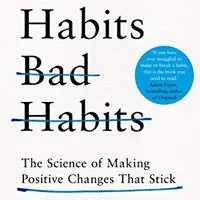
Good Habits, Bad Habits: The Science of Making Positive Changes That Stick — Wendy Wood
Slot closes the environmental-design section explicitly citing 'Wendy Wood's own research synthesis' making the case for a design-first approach with field evidence. This is that synthesis.
As an Amazon Associate, we earn from qualifying purchases — at no extra cost to you.
Habit formation. Ann Graybiel's research at MIT on basal ganglia function explains the neurological endgame of all this design work. Well-formed habits get transferred from the deliberate, energy-expensive prefrontal cortex to the automatic, always-available basal ganglia. The cue-routine-reward sequence, once established, runs without conscious supervision — which means it runs without drawing on whatever self-regulatory resource you do or don't have available that day.
The habit that required real effort in week one requires almost none by month six. That's not discipline improving. That's behavior migrating to a part of the brain that doesn't need discipline.
James Clear built Atomic Habits around this principle — that systems outlast motivation, and environmental design outlasts willpower — and the book's practical architecture for building these systems reflects serious behavioral science.
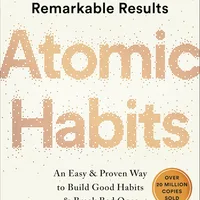
Atomic Habits — James Clear
Slot follows the habit-formation/basal-ganglia section that explicitly names James Clear and Atomic Habits as the practical architecture built on the principle that systems outlast motivation.
As an Amazon Associate, we earn from qualifying purchases — at no extra cost to you.
How to Start Today
The translation from this research to next Monday is more straightforward than the science that produced it.
-
Audit your current willpower battles. Spend a week noticing — not judging — every moment you have to force yourself to do something or resist something. Write them down. You're mapping the terrain where your systems are currently failing you.
-
Write implementation intentions for your top three friction points. Take the behaviors you most want to change and write the when-then script for each. Be ruthlessly specific about the cue: not a time of day but an observable trigger you'll recognize without effort.
-
Change one physical element of your highest-friction environment this week. One. The scope isn't the point — the habit of environmental design is. Put what you want to avoid out of reach. Put what you want to do within arm's reach. Your future self will encounter less resistance every day that follows.
None of these steps ask you to generate more willpower. They ask you to design situations where the behaviors you want are also the behaviors that require the least effort to perform.
What the Radishes Were Actually Showing

The radishes-and-cookies study may document a real effect, an overestimated effect, or an effect contingent on the beliefs participants brought into the room. The science is genuinely unresolved. Watching it get contested, revised, and complicated in public is one of the more instructive demonstrations of how science actually works — through open argument and honest replication attempts, not the accumulation of certainty.
But the 25-year research program that surrounded ego depletion has produced something more durable than any single experiment: a detailed picture of the difference between people who reliably do what they intend and people who don't.
The difference almost never comes down to the quality of their willpower.
It comes down to the quality of their systems.
The person who never misses their morning workout doesn't have more discipline than you. They've almost certainly built a situation where skipping costs more effort than showing up. The person who eats well without visible struggle made the difficult choices earlier — at the grocery store, in the kitchen, in the weekly plan — so that the moment of temptation encounters fewer options.
Designing your evolution isn't about becoming someone who never struggles. It's about designing a life where the struggle, more often than not, has already been handled before the moment of test arrives — because the architecture made the good choice the easy one.
Which behavior have you been trying to willpower into existence that might actually be a design problem?
Was this helpful?