Mindset· 10 min read
Emotional Hygiene: Treating Psychological Wounds
We treat paper cuts but ignore rejection and failure. Here's the science of emotional hygiene — and what to do about psychological wounds.

Emotional Hygiene: Treating Psychological Wounds
The paper cut got five minutes of your undivided attention.
You ran it under cold water, hunted down a plaster, probably winced and muttered something impolite. You treated it — instinctively, immediately, without stopping to ask whether it was serious enough to bother. Because that's what you do with wounds. That instinct — the immediate, specific, deliberate response — is exactly what emotional hygiene asks you to bring to your inner life, too.
Now think about the last time someone rejected you. A job application that came back with a polite no. A pitch that died in the silence after you finished speaking. A message left on read for three days by someone who, you'd told yourself, was probably just busy.
How long did you spend actively treating that?
Probably about thirty seconds before the internal monologue kicked in: It's fine. Don't be dramatic. Just move on. Then you got back to your to-do list and waited for the feeling to pass.
Here's what psychologist Guy Winch found after nearly two decades of clinical practice: the waiting isn't neutral. The untreated emotional wound doesn't simply fade. It compounds — quietly, steadily, in ways you won't notice until the damage is considerably harder to repair.

The practice that nobody taught you
In 2013, Winch published Emotional First Aid: Practical Strategies for Treating Failure, Rejection, Guilt, and Other Everyday Psychological Injuries
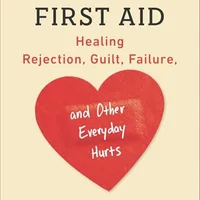
Emotional First Aid — Guy Winch
The article names this book in-text as the origin of the emotional hygiene concept. Zero-friction placement — the reader is already being told the framework has a source.
As an Amazon Associate, we earn from qualifying purchases — at no extra cost to you.
, a book built around a question so obvious it's almost embarrassing once you hear it: if every school child learns to wash and bandage a cut, why does nobody teach us how to treat a rejection, a failure, or a guilt spiral the moment it occurs?
His answer, drawn from clinical psychology and the broader research on psychological injury, is that we've built an entire cultural infrastructure around physical hygiene — and left the psychological equivalent almost completely empty. You know you're supposed to disinfect a cut, rest a sprained ankle, and see a doctor for anything that doesn't heal within a reasonable window. Your psychological hygiene? Most people's entire practice consists of waiting and hoping.
This matters more than it sounds. Winch's synthesis of the clinical literature found that specific, nameable psychological injuries — rejection, failure, guilt, rumination — don't operate the way general sadness does. They have identifiable mechanisms. They compound through specific cognitive pathways. And they respond to specific, targeted interventions that most people never apply, because nobody told them those interventions existed.
The concept he called emotional hygiene isn't a synonym for "self-care," which has become so diluted it now covers everything from bubble baths to boundary-setting scripts. Emotional hygiene, in Winch's framework, is something narrower and more specific: the daily practice of monitoring for specific psychological injuries and applying targeted first aid when you find them, the same way a daily physical routine checks for cuts, soreness, and signs that something needs attention.
You may have already read about Kristin Neff's self-compassion research — the practice of meeting your own suffering with non-judgmental, steady kindness. That's a different, and genuinely valuable, thing. Self-compassion is a general stance toward yourself as a whole. Emotional hygiene, as Winch defines it, is targeted first aid for a specific, identifiable wound in the moment it occurs. One is a disposition; the other is emergency care.
Why psychological wounds feel less real than physical ones
Here's the mechanism Winch spent the most time dissecting, because it's the one that stops everything else from working.
When you cut yourself, the wound is visible. The blood confirms that something real happened. The pain is localized and unambiguous. Nobody has to persuade you that a cut deserves treatment.
When someone rejects you, or when you fail at something that genuinely mattered, the damage is real — measurable in mood, self-esteem, physiological stress markers, and even immune function — but it's invisible. You can't point to it. Nobody else can see it. And critically, you've absorbed a lifetime of cultural messaging, subtle and explicit, suggesting that psychological discomfort is a weakness rather than an injury.
So the average person's response to a psychological wound is to invalidate it. It's not that big a deal. Other people have it far worse. I should just toughen up.
What Winch found — and what makes this so costly — is that invalidating a real injury doesn't reduce its size. It delays treatment. And the longer specific psychological injuries go untreated, the more they activate the compounding mechanisms, particularly rumination, that make them progressively harder to close.
This isn't a loose metaphor. Landmark neuroimaging research by Naomi Eisenberger and colleagues found that social rejection activates many of the same brain regions involved in physical pain — the anterior insula and dorsal anterior cingulate cortex — and later imaging studies replicated the overlap. Bessel van der Kolk documented the same underlying terrain in The Body Keeps the Score
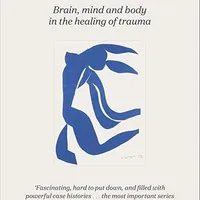
The Body Keeps the Score — Bessel van der Kolk
The article cites van der Kolk directly on the shared biological architecture of emotional and physical pain. Highest-selling trauma title in the catalogue's thematic space (3M+ copies).
As an Amazon Associate, we earn from qualifying purchases — at no extra cost to you.
— the body registers emotional pain through much of the same biological architecture it uses for physical pain, and chronic activation of that architecture carries real downstream consequences for both mental and physical health.
Waiting for an emotional wound to pass isn't patience. It's the same mistake as leaving an infected cut untreated and hoping the body sorts itself out — except the psychological version tends to be quieter about getting worse, which makes it easier to ignore for much longer.
The legitimacy gap is the master problem, because it prevents you from taking the first step: recognizing that the thing you're carrying actually deserves deliberate treatment.
How an untreated emotional injury compounds over time
Here's what actually happens when you don't treat a psychological injury: you don't start fresh the next day. You start with a wound that's had time to settle in — one that's now harder to close than it would have been twenty-four hours earlier.
The most reliably dangerous mechanism is rumination. The mental replay of an event you haven't resolved. Winch's clinical research is consistent with a substantial body of work showing that rumination doesn't process a painful event — it amplifies it. Every replay deepens the neural pathway, makes the emotional response more accessible, and starts spilling into adjacent areas: your self-assessment, your social confidence, your ability to concentrate on anything else.
You know the experience. You don't consciously decide to think about the rejection for the forty-seventh time at 2am. It arrives on its own. Because the wound wasn't treated, the mind keeps returning to it the way your tongue finds a broken tooth.

The compounding effect matters because it changes the scale of what you're eventually dealing with. A rejection that would have required ten minutes of deliberate emotional first aid on the afternoon it happened might require weeks of active work a month later, after rumination has done its slow damage. Winch's core clinical argument is that the gap between when the injury occurs and when we finally decide to treat it is where most of the suffering is manufactured — and it's largely preventable.
There's a version of this that also applies to your performance. Jim Rohn put it plainly: "Neglect starts out as an infection and then develops into a disease." Leaving small wounds unaddressed doesn't leave you where you were; it slowly tilts your relationship with your own confidence in a direction you won't notice until the tilt has become significant.
Different wounds need different treatments
Here's the part that most general advice on emotional wellbeing gets completely wrong — and it's where emotional hygiene becomes genuinely practical instead of merely conceptual.
Not all psychological injuries are the same, and treating them as if they are is roughly equivalent to applying a cold compress to a bacterial infection and calling it first aid. It might feel briefly soothing. It won't close the wound.
Winch identified distinct categories of psychological injury with distinct, evidence-based interventions. The table below summarizes the framework — and the key diagnostic difference between each:
| Injury | How it compounds | Targeted intervention |
|---|---|---|
| Rejection | Activates pain pathways; triggers social withdrawal that deepens isolation | Genuine reconnection with someone who makes you feel valued |
| Failure | Fixed attributions ("I'm just not good enough") erode self-efficacy over time | Identify specific, changeable factors; challenge the fixed-attribution story |
| Guilt | Unprocessed guilt becomes chronic self-flagellation masquerading as moral seriousness | Real amends where possible, then conscious closure — don't skip either step |
| Rumination | Amplifies every other wound through repetitive replay; spills into adjacent cognition | A cognitively demanding redirect — not passive distraction, but something that requires your full attention |
Rejection activates many of the same neurological pain pathways as physical pain — imaging studies dating back to Eisenberger's 2003 research have confirmed this, and it explains why rejection feels disproportionately sharp compared to its apparent "size." The targeted intervention for rejection isn't time, isn't distraction, and definitely isn't forensically cataloguing everything you did wrong. It's reaffirming your own value and genuinely reconnecting with someone who makes you feel seen. Not performance — actual human contact.
Failure triggers a specific attributional spiral: the mind's immediate tendency is to attribute the outcome to fixed personal characteristics. You're not good enough at this. You just don't have what it takes. The targeted intervention is actively challenging those attributions — forcing yourself to identify specific, changeable factors that contributed to the outcome, because the fixed-attribution story is almost always inaccurate and always costly to leave running unchallenged.
Guilt operates differently again. Genuine guilt about something you actually did that harmed someone else is productive — but only if it converts to meaningful repair or concrete behavior change. Unprocessed guilt that becomes a chronic self-flagellation loop is a psychological injury masquerading as moral seriousness. The intervention is to make real amends where possible, and then — this is the part most people skip — to consciously close the file.
Rumination isn't a wound itself; it's the mechanism that keeps other wounds open. The intervention is interruption: deliberately redirecting attention to something that requires genuine cognitive engagement rather than passive distraction. Research by Winch and others suggests rumination dissolves fastest when you give your mind something genuinely demanding to solve. Not a podcast. Not scrolling. A puzzle, a creative problem, a conversation that demands your full presence.
The diagnostic question you need to get in the habit of asking is: what specific psychological injury am I actually carrying right now? Generic self-care — the broad positivity reframe, the wellness ritual that addresses everything in general and nothing in particular — is not a treatment system. It's a way of feeling like you did something without applying the targeted intervention the wound actually requires.
How to start today: your emotional hygiene protocol

Winch's 2015 TED talk — which has now been watched by millions of people — ends with a challenge: spend just five minutes today practicing emotional first aid. That's the entry point. Here's what that actually looks like in practice:
Step 1: Build the daily check-in habit. At the end of each day — ninety seconds is enough — scan yourself for the four core injuries: rejection, failure, guilt, and active rumination. You're not analyzing your childhood. You're triaging. Is anything open and untreated? A journal designed for structured emotional reflection makes this habit dramatically easier to maintain over time.
Step 2: Name the specific injury. "I feel bad" isn't a diagnosis you can treat. "I'm running a rejection loop about what happened in that conversation" is. The more specifically you name what's happening, the more targeted your intervention can be. Vague emotional pain invites vague, ineffective responses.
Step 3: Apply the right first aid for the specific wound. Rejection → genuine reconnection. Failure → active attribution challenge (changeable factors, not fixed character). Guilt → meaningful repair or conscious closure. Rumination → a cognitively demanding redirect, not passive entertainment. These aren't interchangeable.
Step 4: Read Winch's original framework. The chapter structure in Emotional First Aid walks you through each injury type and its clinical protocol in detail that no summary — including this one — can fully replace. Rejection, loneliness, guilt, rumination, failure, and low self-esteem each get their own chapter with distinct, practical interventions. It's one of those books that quietly reorganizes how you think about your inner life.
Step 5: Track consistency over thirty days. Like physical hygiene, emotional hygiene builds its value through repetition rather than intensity. A habit journal that lets you log which injuries were active and which interventions you applied gives you both accountability and data.

Clever Fox Habit Calendar Circle (24-Month Habit Tracker)
Step 5 asks for 30 days of logged consistency and explicitly links to the habit-journal article. Direct, named product need.
As an Amazon Associate, we earn from qualifying purchases — at no extra cost to you.
Thirty days of consistent daily check-ins — even ninety seconds each — will surface patterns you can't see any other way.
The wound you're already carrying
There's a version of this article that ends with "you deserve to heal." I'm not writing that version, because it isn't really the point.
The point is that untreated psychological wounds don't stay the size they were when you received them. The rejection that felt manageable on Monday afternoon becomes the 2am rumination spiral by Thursday. The failure you shrugged off compounds quietly into a story about your own capacity — one assumption at a time, one replay at a time — until it's a wall rather than a memory.
Winch's research — and the two decades of clinical practice behind it — says this compounding isn't inevitable. It's the predictable cost of skipping first aid. And first aid, by definition, is something you apply immediately, specifically, and deliberately, not something you wait to decide whether you need.
You're reading Vanulos because you're designing your evolution on purpose, not by accident. You track what you eat, what you build, how you spend your hours. Your emotional hygiene deserves the same deliberate architecture as the rest of the system — because the system only runs as cleanly as its least-treated wound.
What's the psychological injury you've been carrying longest without deliberately treating it? Drop it in the comments.
Was this helpful?