Mindset· 11 min read
I Lost My Temper Every Night. Here's What Fixed It
Science-backed techniques to handle tantrums, label emotions, and build emotional resilience in children — without yelling or empty threats.

I Lost My Temper Every Night. Here's What Fixed It
It was a Tuesday. My four-year-old had just thrown a plate of spaghetti across the kitchen floor — not because she was hungry, not because she was angry at the spaghetti, but because I'd given her the blue plate instead of the purple one. I felt the heat rise through my chest. My jaw clenched. I opened my mouth and heard my own father's voice come out: sharp, loud, final.
That moment sent me down an eighteen-month path into emotionally intelligent parenting — a set of tools I desperately needed but nobody had taught me.
My daughter's face crumpled. Not just sad — something worse. Confused. Like the person she trusted most had suddenly become someone she didn't recognize. I stood there in the sauce-splattered kitchen and thought: I'm supposed to be the adult here. Why does a four-year-old have more excuse for losing control than I do?
That night, after she was asleep, I sat on the edge of her bed and made myself a promise. Not some vague "I'll do better" pledge — those had failed me a dozen times already. I needed a system. A set of tools. A way to redesign how I responded when every parenting instinct screamed at me to react.
What I found over the next eighteen months changed our household completely. Not overnight — nothing real works that fast. But the screaming stopped. The guilt spirals stopped. And something I hadn't expected happened: my kids started handling their own emotions differently too.
Why Smart Parents Still Lose It (The Brain Science Behind Child Tantrums)
Here's something nobody tells you at the baby shower: your child's prefrontal cortex — the part of the brain responsible for impulse control, rational thinking, and emotional regulation — isn't fully developed until roughly age twenty-five. Twenty-five. That means when your three-year-old melts down because you broke her banana in half, she is neurologically incapable of "calming down" the way you're asking her to.
Dr. Dan Siegel, clinical professor of psychiatry at UCLA and co-author of The Whole-Brain Child, puts it bluntly: children don't misbehave to manipulate you. They misbehave because their brains are under construction. What looks like defiance is often a nervous system in overwhelm.
But here's the uncomfortable part. Your brain is fully developed. You do have that prefrontal cortex. So when you lose it on a toddler — when I lost it over a plate color — it's not because you're a bad parent. It's because you're running on an outdated emotional program. One you probably inherited.
Jim Rohn used to say, "You can't hire someone else to do your push-ups for you." The same applies here. Nobody can regulate your emotions for you — not your partner, not a parenting book, not a glass of wine at 7 PM. You have to build the muscle yourself.
And here's what I've learned: the techniques that help your kids manage their emotions are almost identical to the ones that help you manage yours. You're not just raising emotionally intelligent children. You're rebuilding yourself in the process.
Emotional intelligence strategies for daily life
"Name It to Tame It": The Emotional Regulation Technique That Changed Everything
The single most effective tool I found comes from the research of Dr. Matthew Lieberman at UCLA. His brain imaging studies showed something remarkable: when people verbally label an emotion — "I feel frustrated," "I notice I'm getting angry" — activity in the amygdala (the brain's alarm system) decreases almost immediately. He calls it affect labeling. In parenting circles, it's known as "name it to tame it."
Emotionally intelligent parenting, at its core, means using this kind of brain-aware approach: recognizing what your child's nervous system is doing, naming the emotion rather than punishing it, and regulating your own reactions before trying to manage theirs.
I started using this on myself before I ever tried it on my kids. When my son would refuse to put on shoes for the fourteenth time, I'd catch the surge in my chest and say — sometimes out loud — "I'm feeling frustrated right now." Not to perform calmness. Not as a mantra. But as a neurological circuit breaker.
The effect was subtle at first. A half-second pause where I'd normally snap. Then the pause grew longer. Long enough to choose a different response.
Then I started teaching my kids the same language. Instead of "Stop crying," I'd try: "You look really disappointed that we can't go to the park right now. That makes sense — you were looking forward to it." The shift was almost eerie. My daughter would hear her feeling reflected back and visibly settle. Not every time. But often enough that it stopped feeling like a coincidence.
Bruce Lipton's research on cellular biology offers a useful frame here. Our cells — and our children — respond to the environment we create. A home where emotions are labeled and validated becomes an environment where the nervous system learns safety. A home where emotions are punished or ignored teaches something very different.
I kept a small journal on the counter — nothing fancy — where I'd jot down one emotional moment from the day and how I handled it. After a month, I could see patterns I'd been blind to. Tuesdays were consistently harder (work stress). Mornings before school were a trigger zone. That kind of self-knowledge is worth more than any parenting theory.
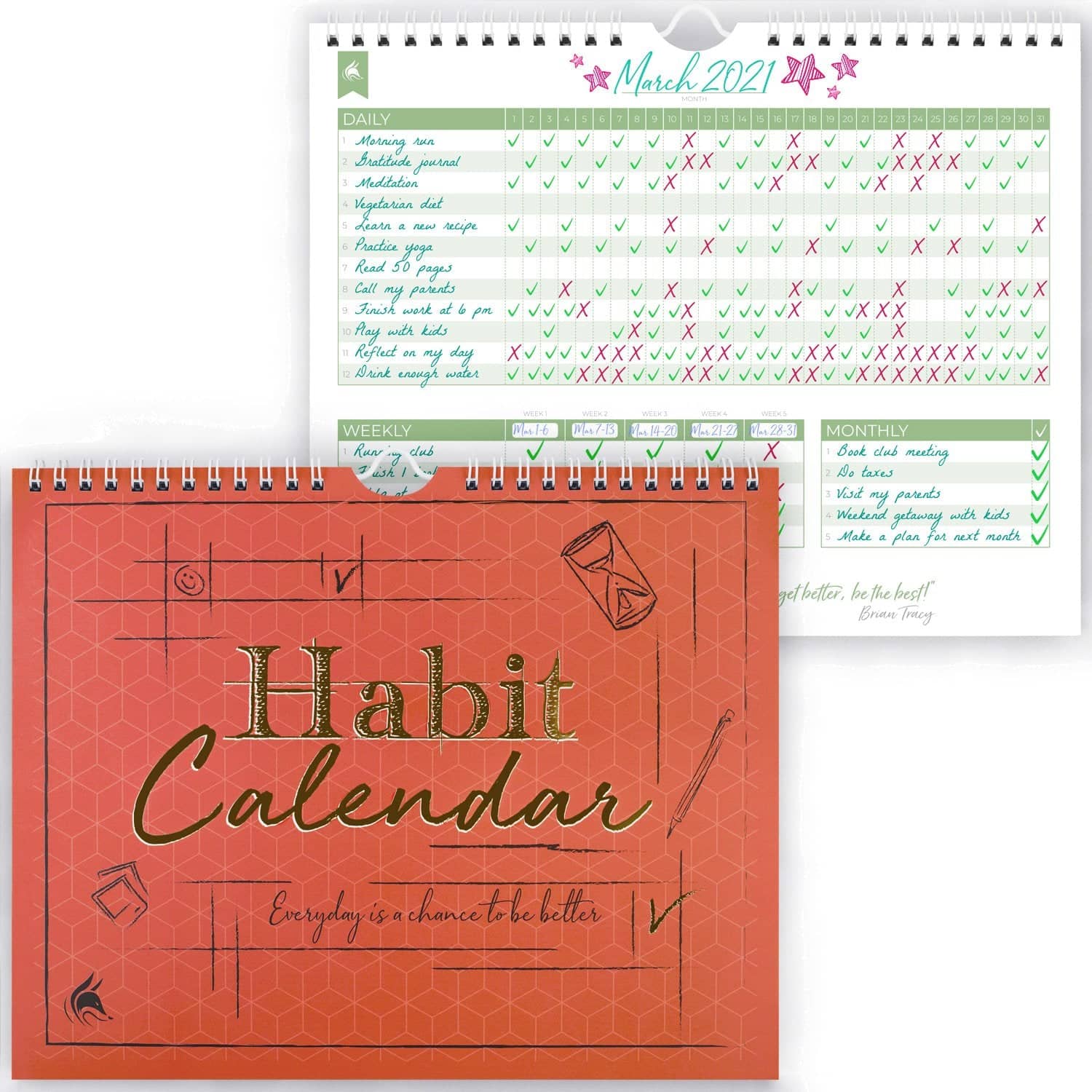
Habit Tracker Journal — Clever Fox
The article describes keeping 'a small journal on the counter' to track emotional moments and discover patterns. This is the exact product bridge — a structured tracker for daily emotional awareness.
As an Amazon Associate, we earn from qualifying purchases — at no extra cost to you.
The 90-Second Rule That Saved Bedtime
There's a piece of neuroscience from Dr. Jill Bolte Taylor — the neuroanatomist who famously documented her own stroke — that I think about almost every evening. She found that the chemical process of an emotion, from trigger to full physiological flush, takes roughly ninety seconds. After that, any remaining emotional charge is being sustained by your thinking about the event, not the event itself.
Ninety seconds.
I started testing this at bedtime, which was our family's nightly battlefield. Kid won't brush teeth. Kid wants one more story. Kid needs water. Kid claims there's a monster. Kid needs different water. By the third request, I'd feel my patience dissolving like sugar in hot coffee.
So I gave myself a rule: when the frustration peaks, do nothing for ninety seconds. Not "count to ten" — that never worked for me. Just notice the sensation in your body and wait. Feel the heat in your chest. Feel it crest. Feel it begin to recede.
It's remarkable what opens up in that space. Sometimes I'd realize the kid wasn't stalling — she was anxious. Sometimes I'd realize I was the one who was tired and irritable, and the extra glass of water wasn't actually a big deal. The ninety seconds didn't make me passive. They made me accurate.
There's a line often attributed to Viktor Frankl — "between stimulus and response, there's a space" — that I think about constantly. Whether Frankl actually wrote those exact words is debated by scholars, but the insight is undeniable: that space is where your entire evolution as a parent lives. Widen it by even a few seconds and you become a different person in the room.
Stop Fixing, Start Witnessing: How to Raise Emotionally Healthy Children
One of the hardest shifts for me — and I think for most parents who are used to solving problems — was learning to witness an emotion without rushing to fix it.
My son falls and scrapes his knee. My instinct: "You're okay! Get up, brush it off." His reality: his knee hurts, he's scared, and the person he ran to for comfort just told him what he's feeling isn't real.
I didn't see the damage in that response until I read Dr. Jonice Webb's Running on Empty, which examines something called Childhood Emotional Neglect — not abuse, not trauma in the dramatic sense, but the quiet absence of emotional attunement. Webb's research suggests that when children's emotions are consistently minimized or dismissed ("You're fine," "Big boys don't cry," "It's not a big deal"), they internalize a devastating conclusion: my inner experience doesn't matter.
That hit me hard. Because I'd heard all of those phrases growing up. And I'd spent decades wondering why I struggled to identify what I was feeling.
So I practiced a different script. Kid falls: "That looked like it really hurt. I'm right here." Kid is angry: "You're really mad about this. I get it." Kid is scared at night: "Being scared in the dark makes total sense. What would help you feel safer?"
The magic isn't in the specific words. It's in the posture behind them: I see you. What you feel is real. You don't have to perform being okay for me.
T. Harv Eker talks about how the beliefs we absorb before age eight become the "blueprint" that runs the rest of our lives. If that's true — and the research on attachment theory strongly supports it — then the emotional climate you create in your home isn't just affecting today's tantrum. It's shaping your child's internal operating system for decades to come.
How self-awareness transforms your daily habits

The Family Emotional Toolkit: Parenting and Emotional Intelligence in Practice
After about six months of stumbling through this, I realized the most helpful thing wasn't a single technique — it was building a small ecosystem of tools and routines that kept our household emotionally literate. Here's what stuck:
The Feelings Check-In (dinner time). Every night at dinner, each person — adults included — shares one feeling from their day and what caused it. My daughter started with "happy" and "sad" as her only options. Within a few months, she was using words like "frustrated," "nervous," and "proud." She's five.
The Cool-Down Corner. Not a punishment spot. Not a time-out chair. A beanbag in the corner of the living room with a few specific items: a pinwheel for deep breathing, a feelings chart on the wall, and a weighted lap pad. When emotions run hot, anyone in the family can go there — including me. Especially me. The kids started using it voluntarily after they saw me model it.
The Repair Ritual. This one matters more than anything else. When I mess up — and I still do, regularly — I go back to my kid and say, "I yelled earlier, and that wasn't okay. I was feeling overwhelmed, and I took it out on you. I'm sorry." Dr. Ed Tronick's "still face" experiments at Harvard showed that rupture in a relationship isn't the problem — it's the failure to repair that causes lasting damage.
The Wind-Down Routine. Bedtime became smoother when we built in a predictable sequence: bath, story, feelings check-in, two minutes of quiet together. Consistency isn't about rigidity — it's about creating enough structure that the nervous system can relax.
Reactive vs. Emotionally Intelligent Parenting Responses
| Situation | Reactive Response | Emotionally Intelligent Response |
|---|---|---|
| Child throws food | "Stop that right now!" | "You're frustrated. I get it. Food stays on the plate." |
| Bedtime refusal | "Go to bed or else!" | "You don't want the day to end. That's hard. Let's do our wind-down." |
| Sibling hitting | "We don't hit! Go to your room." | "You're really angry at your brother. Hitting hurts. Let's find another way." |
| Public meltdown | "You're embarrassing us." | "This is a lot of noise and people. Let's step outside together." |
| Homework resistance | "Just do it, it's not that hard." | "This feels overwhelming right now. Which part feels hardest?" |
The difference isn't softness. It's accuracy. Reactive responses address the behavior. Emotionally intelligent responses address the nervous system driving the behavior.
How to Start Today (Even If You Lost It This Morning)
You don't need to overhaul your parenting overnight. That kind of pressure is what makes people quit before they start. Here's what I'd suggest if you're standing where I was, sauce on the floor, guilt in your chest:
Step 1: Track your triggers for one week. Just notice. When do you lose patience? What time of day? What specific behaviors set you off? Write it down somewhere — a notebook, your phone, a sticky note on the fridge. Patterns will emerge fast.
Step 2: Practice "name it to tame it" on yourself first. Before you ever try this with your kids, spend a week labeling your own emotions in real time. "I'm annoyed." "I'm overwhelmed." "I'm touched." Get comfortable with the vocabulary.
Step 3: Replace one reactive phrase. Pick the thing you say most often on autopilot — "Stop crying," "You're fine," "Because I said so" — and replace it with a witnessing phrase. "You're really upset right now" works in almost every situation.
Step 4: Build one new ritual. The dinner feelings check-in takes three minutes. Start there. It normalizes emotional conversation in your household without requiring a psychology degree.
Step 5: Repair the last rupture. If you yelled yesterday, go to your child today and name it. "I raised my voice and that wasn't fair to you." You won't believe how much weight that lifts — for both of you.

Kindle Paperwhite
The article is dense with research references and book recommendations. A Kindle positions continued learning as effortless — read parenting books during the kids' nap time, highlight passages, build a personal librar…
As an Amazon Associate, we earn from qualifying purchases — at no extra cost to you.
The Generation That Breaks the Pattern
Here's what keeps me going on the hard days — the ones where I'm tired, the baby is teething, the older one won't eat anything green, and I can feel the old programming pulling me toward shortcuts that feel good for five seconds and terrible for five hours.
Every time I choose a different response — every time I name the feeling instead of stuffing it, witness instead of fixing, repair instead of pretending it didn't happen — I'm not just parenting differently. I'm interrupting a generational pattern.
Napoleon Hill wrote that whatever the mind can conceive and believe, it can achieve. I think he was right, but I'd add something: whatever emotional patterns you model, your children will conceive and believe as normal. If they grow up in a home where feelings are named, where anger gets space instead of punishment, where mistakes are followed by honest repair — that becomes their baseline. Their normal.
That's the real meaning of "Design Your Evolution." It isn't just about optimizing your morning routine or reading more books. Sometimes the most important design work you'll ever do is deciding what emotional climate your children grow up breathing.
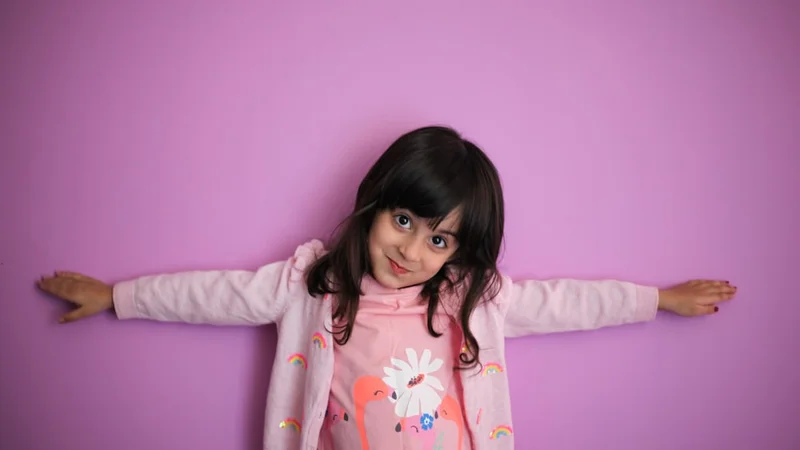
My daughter is six now. Last week, she walked up to me and said, "Daddy, I'm feeling frustrated because my tower keeps falling. I don't need help, I just needed to say it." She went back to her blocks.
I stood in the doorway and thought: that. That's the whole thing, right there.
She named it. She didn't need me to fix it. She just needed to know she could feel it without anyone telling her to stop.
What emotional pattern are you hoping to change in your family? I'd genuinely love to hear — drop it in the comments below.
Was this helpful?